
Table of Contents
Introduction
If you’ve noticed your deck looking a bit tired, faded, or rough underfoot, you’re not alone. After 7+ years of staining decks across Barrie, I can tell you: our climate is fierce on outdoor wood.
Here’s something that surprises most homeowners: while your cousin in Toronto might go 4-5 years between staining, your Barrie deck typically needs attention every 2-3 years. And there’s solid science behind why.
The difference? Barrie’s freeze-thaw cycles, lake-effect moisture, and UV exposure create a perfect storm for deck deterioration. I’ve seen beautiful cedar decks turn grey and splintery in just 18 months when left unprotected.
In this guide, I’ll show you exactly when to stain your deck, the warning signs to watch for, and how to time the project for best results. Understanding Barrie’s specific climate impact can save you thousands in premature replacement costs—I’ve seen it happen too many times.
Want the big picture on Barrie home maintenance? Check out our complete Barrie homeowner’s maintenance checklist.
Why Barrie’s Climate Is Especially Hard on Decks
Living in Barrie means dealing with some of Ontario’s most extreme weather swings. Let me break down what your deck actually endures every year.
The Freeze-Thaw Cycle Problem
Between November and April, Barrie experiences 40-50 freeze-thaw cycles. That’s 30-50% more than Toronto sees.
Here’s what happens: moisture penetrates your deck’s stain and wood grain, then freezes overnight. Water expands about 9% when it freezes—imagine that happening inside your deck boards. Then it thaws during the day. Then freezes again that night.
This repeated expansion and contraction:
-
- Cracks and peels the stain finish
-
- Opens wood grain to further moisture intrusion
-
- Accelerates the grey weathering you see
-
- Creates splinters and rough surfaces
I’ve watched decks that were perfectly stained in September start showing cracks by March. It’s just physics doing its thing.
Lake-Effect Moisture
Our proximity to Georgian Bay and Lake Simcoe means higher humidity and moisture levels than areas even 30 minutes south. This isn’t your imagination—the data backs it up.
According to Environment and Climate Change Canada, Barrie’s average relative humidity runs 5-10% higher than Toronto’s year-round. That extra moisture accelerates:
-
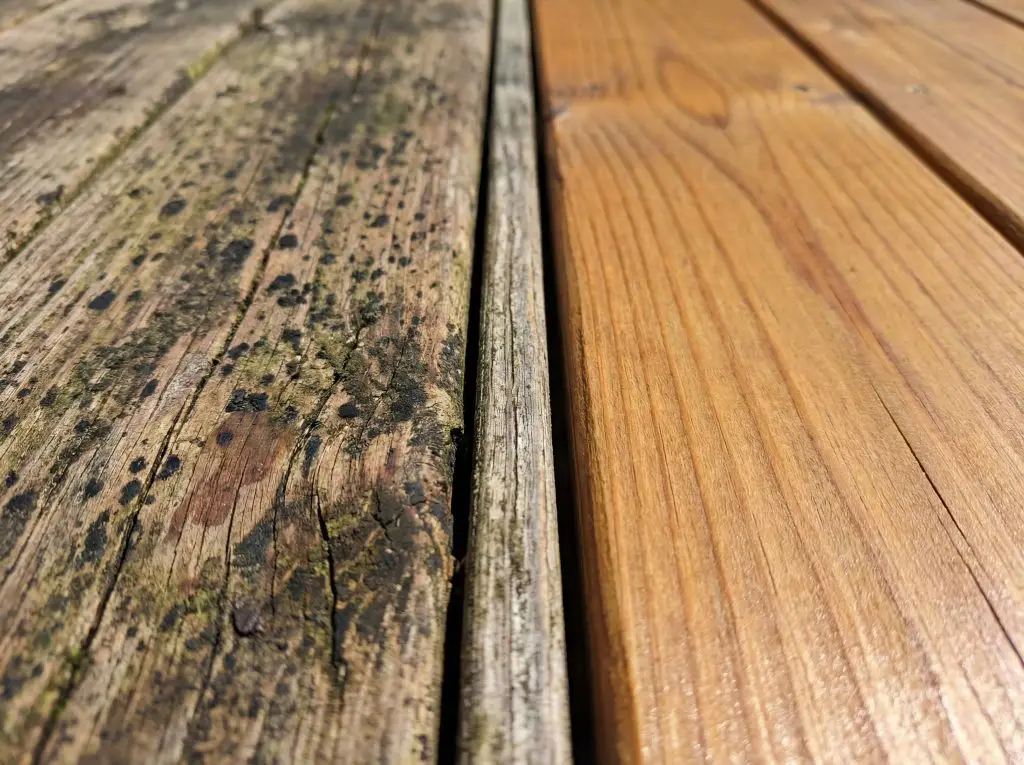
- Mold and mildew growth (especially on north-facing boards)
-
- UV damage (moisture + sun is worse than sun alone)
-
- Stain breakdown at the molecular level
-
- Wood rot in vulnerable areas
Real talk: I’ve cleaned decks in Holly and East Bayfield that had black mold spots after just one winter. The waterfront neighborhoods get hit even harder.
Intense Summer Sun
Barrie summers bring intense UV exposure, especially for south and west-facing decks. That UV light breaks down the oils and pigments in the deck stain, causing fading and reduced protection.
The Natural Resources Canada solar radiation data shows that Barrie gets UV intensity similar to areas hundreds of kilometers further south—but, combined with our moisture levels, the damage compounds faster.
Snow Load and Ice
Heavy snow sitting on your deck for months traps moisture against the wood surface. Ice buildup, especially near railings and in corners, further stresses the finish. And when you shovel? You’re probably scraping off some of that protective stain layer, too.
The bottom line: Barrie decks face 30-40% more environmental stress than GTA decks. That standard “restain every 4-5 years” advice you’ll find online? It doesn’t apply here. Trust me—I learned this the hard way, watching decks fail prematurely.
7 Signs Your Barrie Deck Needs Restaining Right Now
Not sure if it’s time? Here are the telltale signs I look for during inspections:
1. The Water Test Fails
This is the most straightforward and most accurate test. Splash some water on your deck boards.
If it beads up: Your stain is still protecting the wood. You’re good.
If it soaks in within 30 seconds: Your protection has failed. Time to restain.
I do this test on every deck inspection. It takes 10 seconds and tells you everything you need to know.

2. Color Has Faded Significantly
Move a planter or piece of furniture that’s been in the same spot all summer. Compare that protected area to exposed areas. If there’s a dramatic color difference, UV damage has broken down your stain.
I’ve seen decks in South Shore where the protected areas are still rich brown while exposed boards have faded to light grey. That’s your stain literally being destroyed by Barrie’s sun.
3. Grey Weathering Is Visible
Unstained or under-protected wood turns grey as the surface fibers break down. This isn’t just cosmetic—greying means the wood itself is deteriorating, not just the finish.
According to the Canadian Wood Council, once weathering starts, wood loses about 1/4 inch of surface over 100 years. Doesn’t sound like much, but in Barrie’s climate, that deterioration accelerates. Protect it now or pay for it later.
4. The Surface Feels Rough or Splintery
Run your hand across the boards (carefully). If they feel rough, fuzzy, or catch on fabric, the wood is degrading.
This is especially dangerous if you have kids or pets. I’ve pulled splinters out of my own feet on unprotected decks—not fun.
5. Stain Is Peeling or Flaking
Any visible peeling indicates moisture has gotten under the stain. This is common after Barrie winters and signals the protective barrier is completely compromised.
When the stain peels, water gets underneath, and the problem spreads. Fast.
6. Mold or Mildew Spots
Dark spots, especially in shaded areas or near planters, indicate moisture is penetrating the wood. You’ll need to clean first (we can help with that), then assess whether restaining is required.
Barrie-specific: North-facing deck sections and areas under big trees in neighborhoods like Holly and Allandale are especially prone to this.
7. It’s Been 2+ Years Since Last Treatment
Even if your deck looks okay, if you’re approaching the 2-year mark in Barrie’s climate, it’s smart to assess and potentially restain preventatively.
An ounce of prevention, etc.
See our complete home maintenance checklist for seasonal deck inspection tips.
The Best Time to Stain Your Deck in Barrie
Timing matters way more than most homeowners realize. I’ve seen DIY jobs fail simply because they were done at the wrong time.
Ideal Conditions for Deck Staining
You need all of these conditions to line up:
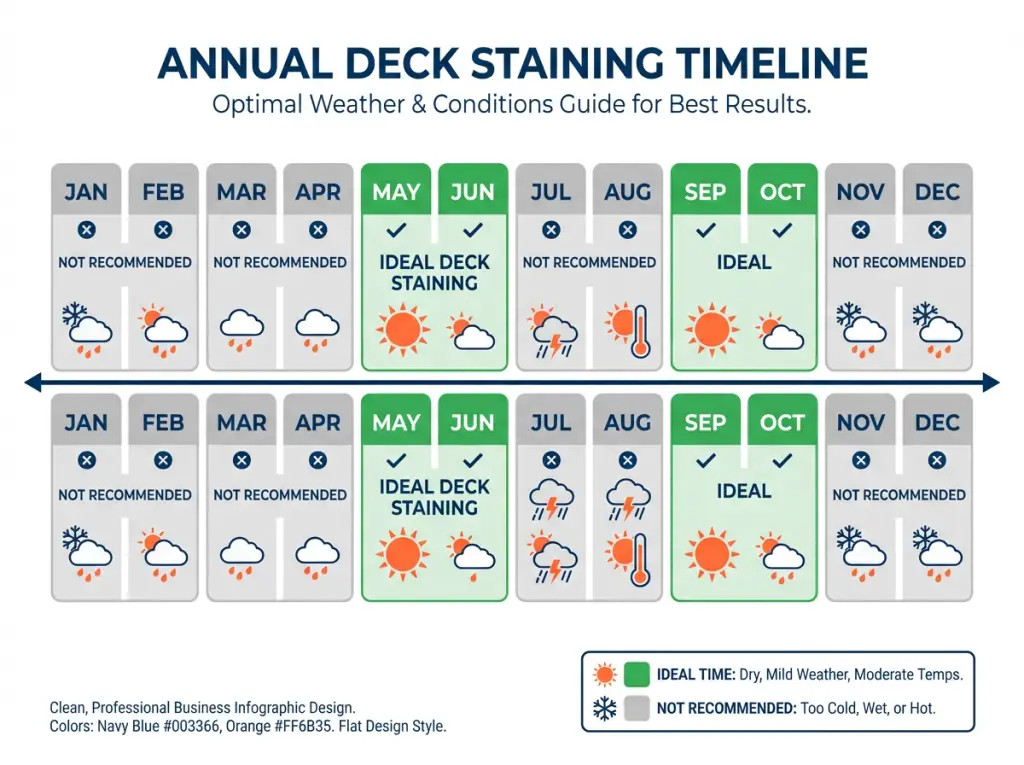
- Temperature: Between 10°C and 25°C (15-20°C is perfect)
- Humidity: Below 70%
- Forecast: No rain for 48-72 hours after application
- Recent weather: No rain for 24-48 hours before (wood must be completely dry)
- No direct hot sun: Morning or evening application works best
Best Months for Barrie Deck Staining
Late May through June: Often the ideal window. Spring rains have passed, temperatures are moderate, humidity is reasonable, and you have the whole summer to enjoy your freshly stained deck.
I typically book up fast for June staining—homeowners who plan get priority.
September through mid-October: Another excellent window, and honestly, my favorite time to stain. Summer heat has passed, humidity has dropped, evening temperatures have cooled for better curing, and you’ll protect your deck for winter (the harshest season).
Plus, fall colors make everything look better in photos. Just saying.
When NOT to Stain (I’m Serious About This)
In direct hot sun: Stain dries too fast on the surface, doesn’t penetrate properly, and you’ll get lap marks and uneven absorption.
Below 10°C, the stain won’t cure correctly. I don’t care what they can say—in Barrie, wait for warmer weather.
On high-humidity days, Extended drying time leads to poor adhesion and potential mildew issues.
Right before rain: Stain needs at least 24-48 hours to cure. Check the 3-day forecast, not just tomorrow.
I’ve been called to fix deck staining disasters caused by all of these. Learn from others’ mistakes.
For more on timing exterior projects in Barrie, please read our guide on when to paint your home’s exterior.
How Much Does Deck Staining Cost in Barrie?
Let’s talk real numbers. Understanding costs helps you budget appropriately and evaluate quotes fairly.
DIY Deck Staining Costs
Here’s what you’re looking at if you go the DIY route:
ItemCost RangeQuality stain (5 gallons)$200-$400Deck cleaner/brightener$30-$60Brushes, rollers, supplies$50-$100Sander rental (if needed)$60-$100Total DIY (average deck)$340-$660
Plus: Your time (usually 2-3 full days, including prep), potential mistakes, and no warranty.
Professional Deck Staining Costs in Barrie
Deck SizeCost RangeSmall deck (under 200 sq ft)$400-$800Medium deck (200-400 sq ft)$800-$1,400Large deck (400+ sq ft)$1,200-$2,000+
Professional costs include:
- Thorough cleaning (pressure washing done right)
- Proper prep work (sanding rough spots, replacing damaged boards)
- Premium stain (we use products that last in Barrie’s climate)
- Proper application technique
- Cleanup
For complete renovation pricing, see our 2025 Barrie Home Renovation Cost Guide.
Why Professional Staining Often Makes Sense
Look, I’m not going to tell you that you can’t DIY deck staining. Plenty of people do it successfully.
But here’s what you’re getting with professional staining:
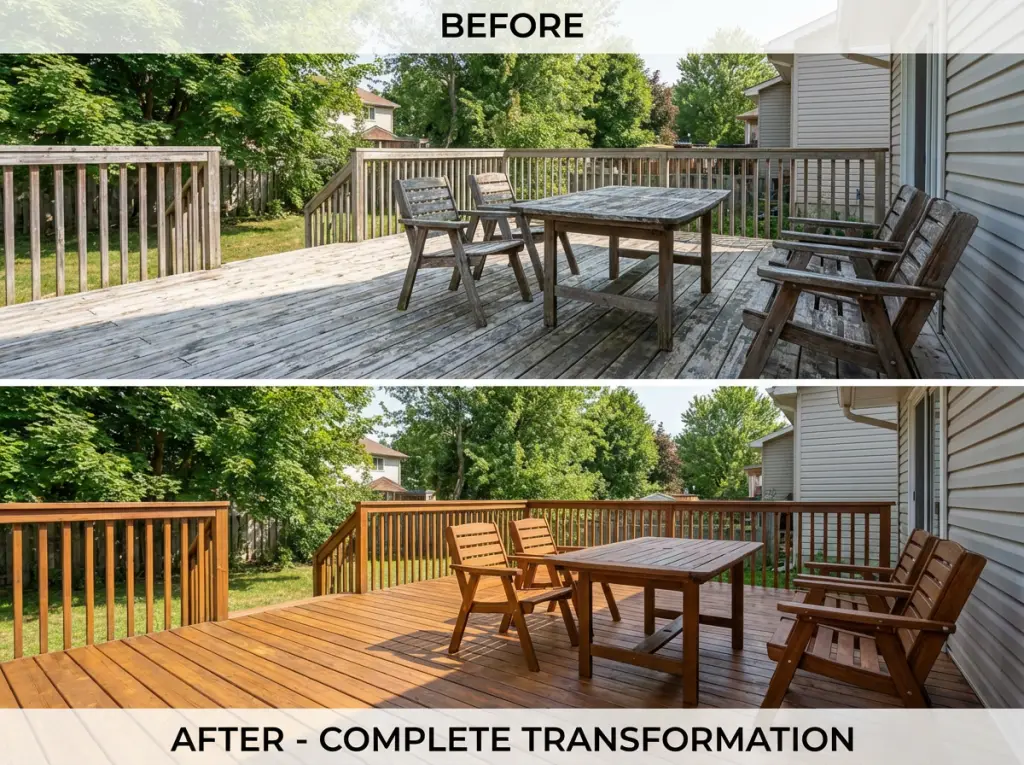
Proper prep work: This is 60-70% of the job. Cleaning, sanding, repairing loose boards, and checking structural integrity. Most DIYers underestimate prep time.
Experience with Barrie conditions: We know which stains actually perform in our climate. We know how to handle moisture levels in different neighborhoods. We know when conditions are right.
Efficient application: A pro can do in one day what most homeowners take a whole weekend (or two). Your time has value.
Guaranteed results: If something goes wrong with our work, we fix it—no additional cost. Peace of mind is worth something.
Learn more about our deck building, staining, and restoration services.
Choosing the Right Stain for Barrie’s Climate
Not all deck stains perform equally in our harsh environment. After testing dozens of products over the years, here’s what actually works.
Oil-Based vs. Water-Based Stains
Oil-based stains penetrate deeper and offer superior moisture protection—ideal for Barrie’s freeze-thaw cycles. The oils in the stain actually displace moisture in the wood.
Downside: Stronger odor, longer drying times (24-48 hours), and you need mineral spirits for cleanup.
Water-based stains are easier to apply, dry faster (4-6 hours), and are more environmentally friendly. Quality water-based options now rival oil-based performance.
According to Canada Mortgage and Housing Corporation (CMHC), modern water-based deck stains have come a long way. The key is choosing products specifically rated for Canadian climates.
Opacity Levels Explained
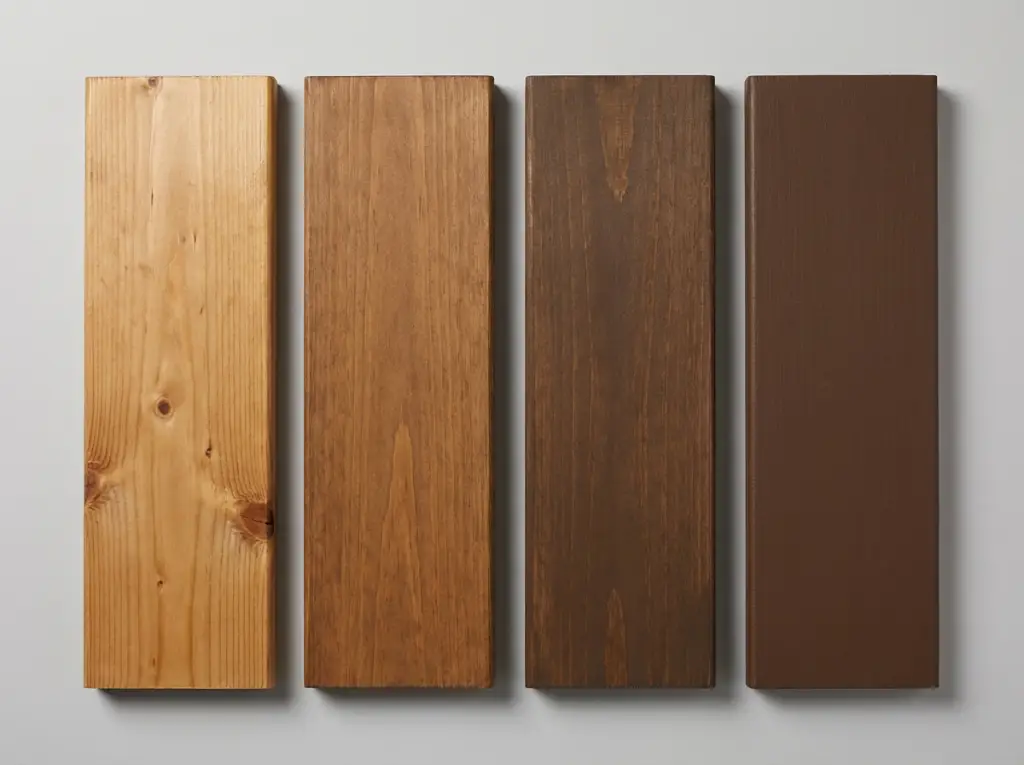
Clear/transparent: Shows whole wood grain but needs reapplication every 1-2 years. Looks beautiful but high maintenance.
Semi-transparent: Good balance of grain visibility and protection. This is what we recommend for most Barrie decks—you get the natural wood look plus 2-3 years of solid protection.
Semi-solid: More color, more UV protection, hides grain partially. Suitable for older decks with some weathering.
Solid: Maximum protection, covers grain completely, looks more like paint. Best for decks with existing damage or homeowners who want minimal maintenance.
For Barrie’s climate specifically: We typically recommend semi-transparent or semi-solid stains with high UV protection ratings (look for “UV absorbers” on the label).
Protect Your Investment—The Math Makes Sense
Your deck represents a significant investment—typically $8,000-$25,000 for new construction in Barrie. Protecting it with regular staining costs a fraction of the cost of replacement and extends its life by decades.
The math is simple:
- Regular staining every 2-3 years: ~$1,000-$1,500/cycle = ~$500-$750/year
- Deck replacement due to neglect: $15,000-$30,000 after 10-15 years
- Deck lifespan with proper care: 25-30+ years
I’ve seen decks from the 1990s that still look fantastic because they were maintained properly. I’ve also seen 10-year-old decks that need complete replacement because they were neglected.
Don’t let Barrie’s climate cut your deck’s life short.
Ready to Restore Your Deck?
If your deck shows signs of wear or it’s been more than 2 years since its last treatment, now is the time to act.
Waiting until visible damage appears means:
- More prep work required
- Higher costs
- Potentially shortened deck life
- Possible structural repairs needed
We serve all of Barrie, including:
- Holly
- East Bayfield
- South Shore
- Allandale
- Big Bay Point
- And all surrounding neighborhoods
Plus Bradford, Collingwood, Orillia, and all of Simcoe County.
Get your free deck staining quote:
(705) 910-0106 (call or text)
[email protected]
Request a Quote Online
We’ll assess your deck’s condition, recommend the best approach, and give you honest pricing—no pressure, no games.
Related Reading
Want to learn more about Barrie home maintenance?
- The Complete Barrie Homeowner’s Maintenance Checklist
- How Barrie’s Climate Impacts Your Home Year-Round
- 2025 Home Renovation Cost Guide for Barrie
- DIY vs Professional: When to Hire a Handyman
Our deck services:
Frequently Asked Questions
Q: Can I stain my deck if it’s only been one year?
Yes, absolutely. If your deck shows signs of wear (water test failure, fading, roughness), restain it. In Barrie’s climate, some decks need annual attention, especially those with heavy sun exposure or poor drainage.
Q: What happens if I wait too long between staining?
The wood begins to deteriorate—grey weathering, raised grain, and possible rot in vulnerable areas. You’ll need more extensive prep work (deep cleaning, sanding, and potential board replacement), which will significantly increase costs.
Q: Is spring or fall better for staining in Barrie?
Both work, but the fall (September-October) is often ideal. Lower humidity, moderate temperatures, and you’re protecting your deck before winter hits. Spring works too, but the weather can be more unpredictable.
Q: How long before I can use my deck after staining?
Usually, 24-48 hours for light foot traffic, 72 hours before replacing furniture. Complete cure takes 7-14 days—avoid heavy use or getting it wet during this time.
Q: Do I need to strip the old stain before restaining?
Not always. If the old stain is in good condition (just faded), you can clean and restain over it. If it’s peeling or damaged, stripping or heavy sanding may be needed. We assess this during quotes.
Last updated: December 2025
Information accurate for Barrie and Simcoe County, Ontario, Canada
Written by Wallet Friendly Handyman—7+ years of Barrie deck staining experience

Written by
Alex A.
Owner & Operator, Wallet Friendly Handyman · Licensed & Insured · WSIB Cleared
Alex has been providing professional handyman and renovation services across Barrie and Simcoe County since 2018. With 7+ years of hands-on experience in bathroom renovation, deck building, appliance installation, and general home repairs, he writes practical guides to help Barrie homeowners make informed decisions about their homes.
Get a Free Estimate →