
Table of Contents
Table of Contents
Owning a home in Bradford West Gwillimbury means dealing with hot humid summers, hard winters with deep freeze-thaw cycles, clay soil that heaves footings, and proximity to the Holland Marsh that pushes ground moisture higher than most of the GTA. A consistent maintenance routine isn’t optional in BWG — it’s the difference between $50 of caulking and a $4,000 water-damage repair. This checklist gives you the realistic monthly, seasonal, and annual tasks that keep Bradford homes in shape through 2026 and beyond.

Why Bradford Homes Need a Maintenance Routine
BWG sits in a climate zone that’s harder on homes than most people realize. Three things drive that:
- Freeze-thaw cycles. Bradford typically gets 60–80 freeze-thaw cycles per winter. Every cycle expands water in cracks 9% — slowly forcing concrete, brick, mortar, and even asphalt apart. Catching small cracks in October prevents foundation work in May.
- Ground moisture. Holland Marsh proximity and clay-heavy soils through much of west Bradford mean groundwater sits closer to the surface than in higher-elevation Simcoe communities. Sump pumps, weeping tile, and grading matter more here.
- Lake-effect snow load. Bradford gets serious snow events when wind comes off Lake Simcoe — 30–50 cm in 24 hours isn’t unusual. Roofs, gutters, and gutters need to handle that load without ice-damming.
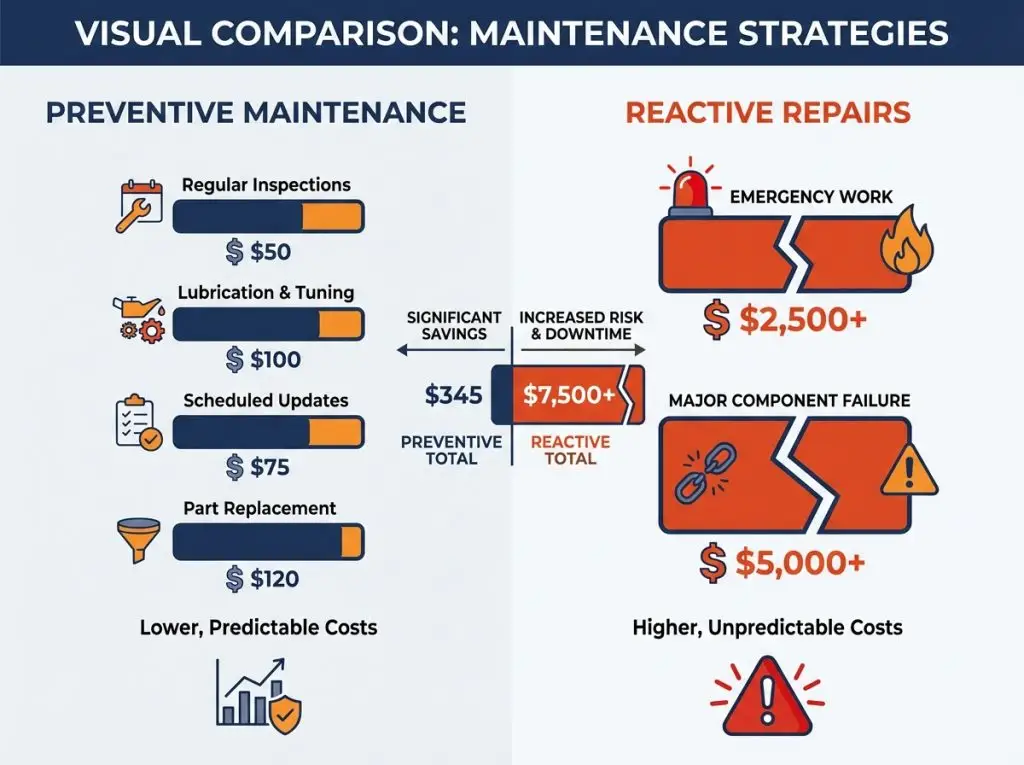
Skipping maintenance doesn’t save money — it shifts cost from small predictable expenses to large emergency repairs. The numbers further down show that gap clearly.
Monthly Tasks (Year-Round)
| Task | Why It Matters in BWG | Time |
|---|---|---|
| Test smoke + CO detectors | Ontario law requires working CO detectors near sleeping areas | 5 min |
| Replace HVAC filter | High pollen in spring, dust from Holland Marsh agriculture in fall | 5 min |
| Run garbage disposal with ice + lemon | Keeps blades sharp, clears odours | 2 min |
| Visual sump pump check | High water table here means pumps work hard year-round | 5 min |
| Walk-around exterior look | Catch siding, soffit, or roof issues early | 10 min |
| Check under-sink for moisture | Slow drips become $1,500 cabinet rebuilds | 5 min |
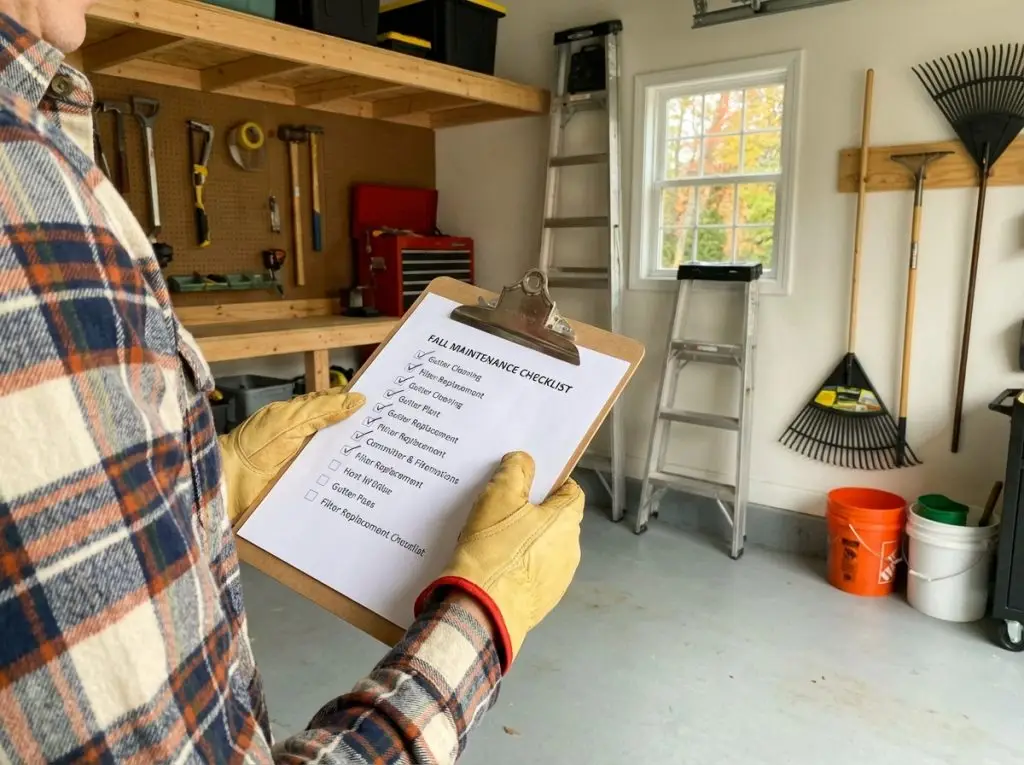
Total monthly time: about 30 minutes. Doing these consistently catches 70% of the issues that turn into emergency repairs.
Spring Tasks (April–May)
Spring in Bradford means thaw runoff, debris from winter, and the first opportunity to spot damage from freeze-thaw. Tackle these in late April once snow is fully gone.
- Clean gutters and downspouts. Winter debris and ice buildup leave grit and granules from shingles. Blocked downspouts in BWG’s clay soil cause foundation pooling fast.
- Inspect roof from ground. Look for missing or curled shingles, damaged flashing, ice-dam aftermath. Don’t climb up unless you’re qualified — get a proper roof inspection if anything looks off.
- Walk the foundation. Check for new hairline cracks, especially at corners. Pre-1990 Bradford homes commonly develop seasonal cracks that need flexible sealant patches.
- Test sump pump aggressively. Pour 5 gallons in the pit. Pump should kick on, clear the water, and shut off cleanly. Replace pumps over 7 years old — they fail when you need them most.
- Inspect deck for winter damage. Loose railings, raised nails or screws, rot at posts. Tighten what’s loose, schedule restaining if surface is grey or dry-cracked.
- Service AC system. Have HVAC technician check refrigerant, clean coils, and verify operation before first hot day. Booking in April is much easier than late May.
- Reseal exterior caulking. Around windows, doors, and where siding meets trim. Failed caulk lets water penetrate during BWG’s heavy spring rains.
- Walk the perimeter for grading. Soil should slope away from foundation 6 inches per 10 feet. Fix any low spots that direct water at the house.
Summer Tasks (June–August)
Summer is the season for exterior upkeep and getting decks, paint, and outdoor systems ready for years of wear.
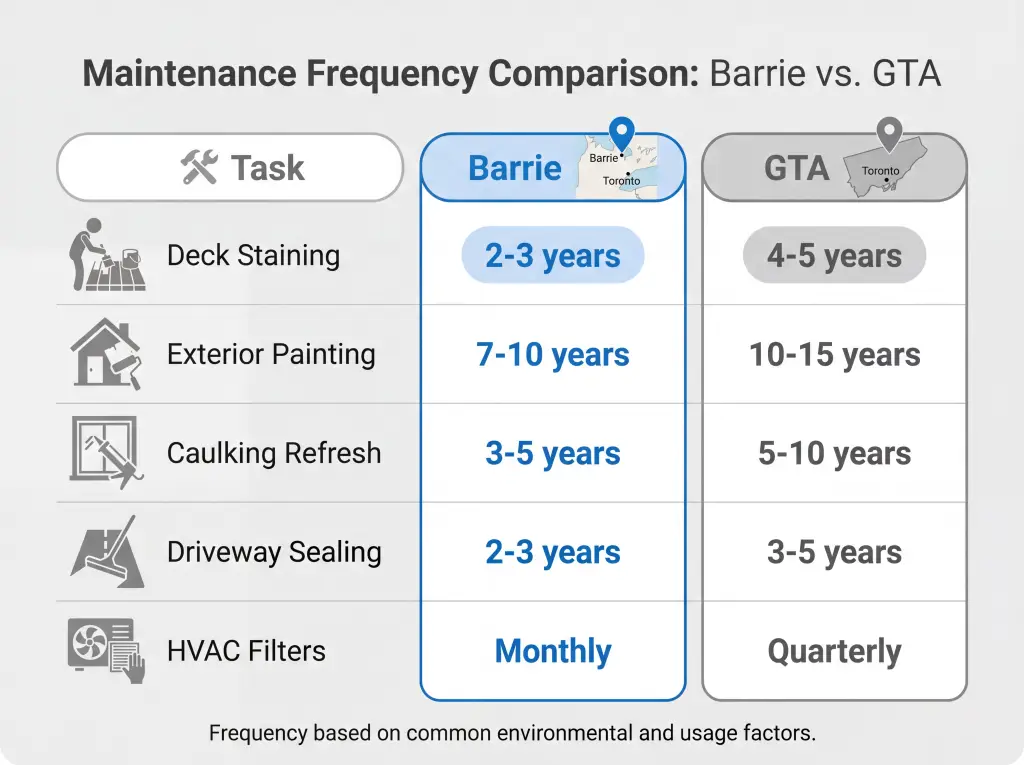
- Restain or seal deck. Best window is mid-June through mid-August. Avoid mid-July’s most humid days. See our deck restoration guide.
- Pressure wash siding and walkways. Mildew and algae are common on north-facing surfaces in BWG’s humidity. Don’t power-wash too aggressively on older brick.
- Touch up exterior paint. West-facing walls in Bradford take harsh afternoon sun and peel first. Catch peeling early before it spreads.
- Inspect screens and windows. Replace torn screens, lubricate window tracks, check that windows seal fully when closed.
- Trim trees and bushes off the house. Branches touching siding hold moisture, scratch paint, and give pests a bridge to your roof.
- Drain and clean dehumidifier. Bradford basements run dehumidifiers hard from May to October. Empty bucket, clean coils, check the float switch.
- Test outdoor faucets and irrigation. Check for leaks, repair any that drip. Bradford freeze-thaw cycles damage hose bibs that weren’t drained properly.
Fall Tasks (September–November)
Fall is the most important maintenance season in Bradford. Everything you do (or don’t do) before the freeze in late November affects how well your home handles 3–4 months of harsh weather.
- Clean gutters again — second cleaning is non-negotiable. Most Bradford homes need gutters cleared after leaf drop in late October. Plugged gutters are the #1 cause of ice dams.
- Service furnace. Book a tune-up before the rush in October. Replace filter, check humidifier (if equipped), have technician verify CO levels.
- Drain and shut off outdoor faucets. Disconnect hoses. Bradford gets first hard freeze typically in mid-November — pipes burst when this is forgotten.
- Reverse ceiling fans to clockwise. Pushes warm air down, reduces heating costs 5–10%.
- Seal windows and doors. Replace failed weatherstripping. A typical Bradford home loses $200–$400 in heat per winter through bad seals.
- Inspect attic insulation. Low spots, compressed insulation, or visible wood structure means heat is escaping. Adding R-value pays back fast in BWG winters.
- Clean and store deck furniture. Wood deck furniture left out through Bradford winters cuts its lifespan in half.
- Test sump pump backup battery. Power outages from ice storms are common — battery backups save your basement when the grid drops.
- Final exterior caulking and paint touch-ups. Last warm windows for sealing exterior gaps before winter.
Winter Tasks (December–March)
- Clear snow from roof valleys and gutters after major storms. Use a roof rake from the ground — never climb on a snowy roof. Ice dams form when warm attic air melts roof snow that refreezes at cold eaves.
- Watch for ice damming. Icicles on the eaves are warning signs. If you see them forming, your attic insulation or ventilation isn’t right.
- Monitor humidity inside. Aim for 30–40%. Higher than that during BWG cold snaps means condensation on windows and possible mold growth.
- Run exhaust fans during showers and cooking. Easy to forget but moisture buildup is real in Bradford’s tight modern homes.
- Clear snow from the foundation perimeter. Especially after big storms — letting snow pile against siding leads to spring water entry as it melts.
- Test backup heating sources. Generator, fireplace, etc. Bradford ice storms have caused multi-day outages — make sure your backup actually works before you need it.
Annual Tasks (Once a Year)
- Roof inspection by a pro. Once a year, ideally early fall. A professional inspection catches issues you can’t see from the ground.
- Furnace and AC tune-ups. Once each. Furnace before fall, AC before summer.
- Drain and flush water heater. Sediment from Bradford’s hard water (especially from older municipal lines or wells west of town) reduces efficiency 10–20% over a few years.
- Test all GFCI outlets and breakers. Hit the test button on each, verify they trip and reset.
- Inspect dryer vent and ductwork. Lint buildup is the cause of about 3,000 home fires per year in Canada. Clear the full duct, not just the trap.
- Termite + pest perimeter check. Bradford has carpenter ants, termites in some areas, and mice everywhere. Check soffits, foundation gaps, and dryer vents.
- Update emergency plan. Test smoke detectors with full battery replacement, refresh first-aid kits, verify fire extinguishers haven’t expired.
BWG-Specific Risks to Watch
- Holland Marsh moisture. Homes within 2 km of the marsh are noticeably more prone to basement humidity, mold growth, and clay-soil heaving. Run a dehumidifier May–October as standard.
- Older town-core homes (north of Holland St). 1970s–80s housing stock in this band routinely needs: electrical panel upgrades, knob-and-tube remediation, original cast-iron drain replacement, and asbestos-vermiculite insulation removal.
- South-end newer subdivisions. Summerlyn, Grand Central, Green Valley homes are 2005+ but still need attention to: deck stain (smaller lots = more shaded decks that hold moisture), grading (some subdivisions have settling issues 5–10 years post-build), and HVAC re-balancing.
- Lake-effect snow loading. Wind from Lake Simcoe occasionally drops 30–50 cm overnight. Roofs over 25 years old should be inspected before each winter.
- Spring runoff drainage. Holland Marsh feeder creeks rise quickly in March-April. Properties in the lower-elevation streets near marsh boundary should verify sump pump + battery backup work before spring.
Maintenance Cost vs Deferred-Repair Cost

| Task | Maintenance Cost | Cost If Skipped |
|---|---|---|
| Annual gutter cleaning ($150) | $150 / year | $3,500–$8,000 (foundation work) |
| Caulking + weatherstripping | $100–$200 / year | $200–$400 / year wasted heat + drafts |
| Sump pump replacement (every 7 years) | $450–$800 | $5,000–$25,000 (basement flood) |
| Annual furnace tune-up | $150–$200 / year | $1,200–$3,500 (premature replacement) |
| Deck restain (every 2–3 years) | $770–$1,350 | $6,200–$14,400 (rebuild) |
| Roof inspection ($200–$350) | $200–$350 / year | $8,000–$25,000 (full replacement) |
| Dryer vent cleaning | $120–$180 / year | $10,000+ (fire damage) |
Annual maintenance budget for a typical Bradford home: $1,200–$2,500. Annual deferred-repair cost when maintenance is skipped: $3,500–$15,000+ on average, with occasional five-figure surprises.
DIY vs Call a Pro

| Task | DIY? | Why |
|---|---|---|
| Smoke + CO detector tests | ✅ DIY | Push-button, no tools |
| HVAC filter replacement | ✅ DIY | Slide-in, slide-out |
| Caulking + weatherstripping | ✅ DIY | Cheap supplies, simple tools |
| Gutter cleaning (single-story) | ✅ DIY w/ ladder | Use ladder safety, work with a partner |
| Gutter cleaning (two-story or steep roof) | ⚠️ Pro | Falls are the #1 home-injury cause |
| Roof inspection or repair | ⚠️ Pro | Safety, training, insurance liability |
| Furnace + AC tune-ups | ❌ Pro only | Refrigerant + gas-line work needs licensed tech |
| Sump pump replacement | ⚠️ Pro | Get this wrong and your basement floods |
| Electrical panel work | ❌ Pro only | ESA permit + licensed electrician required |
| Foundation crack inspection | ⚠️ Pro | Structural assessment matters |
| Drywall patching (small) | ✅ DIY | Or call our drywall repair service |
Frequently Asked Questions
Q: How much should I budget for annual home maintenance in Bradford?
A: Plan for 1–3% of home value per year. For a typical $750,000 BWG home, that’s $7,500–$22,500/year over time, but in any given year you’ll likely spend $1,200–$2,500 on routine maintenance and put the rest toward larger periodic items (roof, HVAC, deck, painting).
Q: Which Bradford maintenance task gets skipped most often, and what does it cost?
A: Fall gutter cleaning. Skipping it leads to ice dams, ice damming leads to roof leaks, and roof leaks turn into ceiling and drywall replacement. We’ve seen $200 of avoidance turn into $5,000+ of repairs in a single winter.
Q: Do south-end Bradford subdivisions need the same maintenance as older town-core homes?
A: Yes, but the focus is different. Newer homes need attention to grading (post-construction settling), HVAC (modern systems with tighter envelopes), and exterior finishes that take harder UV exposure on bigger lots. Older homes need focus on electrical, plumbing, and structural elements that are aging out.
Q: What’s the single best maintenance investment for a Bradford homeowner?
A: A reliable sump pump with battery backup ($600–$1,400 installed). Bradford’s water table, clay soil, and ice-storm power outages combine to make basement flooding the most common five-figure surprise we see. The backup pays for itself the first time the grid drops during a storm.
Q: How do I find a reliable handyman or contractor in Bradford for maintenance work?
A: Three checks: WSIB clearance certificate, $2M general liability insurance, and three references from Bradford-area projects. Reputable trades will provide all three without hesitation. A written quote with itemized labour and materials is non-negotiable for anything over $500.
Q: Should I do an annual home inspection even if I’m not selling?
A: Not a full $500–$700 home inspection every year. But a roof inspection, foundation walk-around, and HVAC check-up annually catches 90% of issues before they’re emergencies. Total cost: $400–$700/year. Far less than a single deferred repair.
Need Help With Bradford Home Maintenance?
If you’d rather hand off the seasonal maintenance work and focus on enjoying your home, call (705) 910-0106 or visit our Bradford handyman services page. We do single-task call-outs and seasonal maintenance bundles. Licensed, insured, WSIB cleared. Serving BWG, Bond Head, Holland Marsh, and surrounding areas.
Last updated: May 2026
Information accurate for Bradford West Gwillimbury, Bond Head, Holland Marsh, and Simcoe County, Ontario, Canada
Written by Wallet Friendly Handyman — 7+ years of Simcoe County renovation and maintenance experience

Written by
Alex A.
Owner & Operator, Wallet Friendly Handyman · Licensed & Insured · WSIB Cleared
Alex has been providing professional handyman and renovation services across Barrie and Simcoe County since 2018. With 7+ years of hands-on experience in bathroom renovation, deck building, appliance installation, and general home repairs, he writes practical guides to help Barrie homeowners make informed decisions about their homes.
Get a Free Estimate →